Organized by Stockholm International Water Institute (SIWI), World Water Week is the leading global conference for dialogue…
World Water Week in Stockholm is an annual, non-profit event organized by SIWI, convening decision-makers…
Each year, World Water Week brings together actors who rarely meet elsewhere: governments, companies…
Over 35 years, World Water Week has evolved from a small scientific gathering into a global meeting place, reflecting changing …
What Swedish Water House is: Connecting Sweden to global water governance
Swedish Water House works by creating spaces where Swedish actors can meet, exchange perspectives, and engage …
Events and seminars are a core way in which Swedish Water House connects Swedish actors to global water issues.
Shaping decisions that secure water for the future
A clear overview of who we are and where we are heading
SIWI was founded in 1991
How SIWI works, who we are, and the people driving our mission
Partnerships are at the heart of how SIWI works
Connect
Water connects climate, economies, ecosystems, resilience, and the prospects of peace.
Explore key water topics and how they influence people, nature, and sustainable development worldwide
Water sustains the food we grow, the economies we depend on and the ecosystems we live in.
Connecting people, knowledge, and decisions to create lasting water impact
Bringing people together to shape collective water solutions
Connecting trusted knowledge with policy and practice
Strengthening the ability to govern water in practice
Stay up to date with SIWI’s latest news, stories, events, and resources aa
2127 results
Reports and papers.Jan 20, 2021
Policy publications.Dec 16, 2020
SUMMARY Accountability can be described as “the central and perhaps most powerful element of good governance”[1]. Accountability for Water, Sanitation and Hygiene (WASH) service delivery refers to the principle whereby government officials and those that have a responsibility in water services account for their actions and answer to those they serve.[2],[3] This is fundamental in [ ]
Reports and papers.Dec 8, 2020
The year 2020 marks the 10th anniversary of the United Nations (UN) resolution that recognized the human rights to water and sanitation (HRtWS), and is the last year of the second mandate of the Special Rapporteurs (SRs), spanning 12 years in total.
Policy publications.Dec 7, 2020
Innovative service delivery solutions are needed to close existing gaps in access to services, reduce inequalities, and ultimately ensure Safely Managed Drinking Water and Sanitation for All. This Policy Brief discusses the challenges of adopting innovative solutions in service delivery, and provides recommendations for policymakers, corporate managers, and researchers on what is needed to close [ ]
Policy publications.Dec 4, 2020
Sanitation services are one of the most effective ways to reduce vulnerability to climate change, according to the International Panel on Climate Change. This brief describes some key links between climate action and sanitation services, and suggests routes to more coherent climate and sanitation policies.
Reports and papers.Nov 23, 2020
The aim of this study is to better understand the social accountability mechanisms that can improve the delivery of water and sanitation services. It seeks to answer the question of how local communities engage with decision-makers to realize their human right to water and sanitation. In 2010 and 2014, Forum Syd implemented two projects – [ ]
Reports and papers.Nov 17, 2020
Around the world, countries are preparing their plans for reducing carbon emissions or responding to the impacts of climate change. Water is the primary medium through which we will feel the effects of climate change (UN-Water). As this quote from UN-Water notes, many of those impacts will be felt through changes to water resources, whether [ ]
Guidance, methods and frameworks.Nov 16, 2020
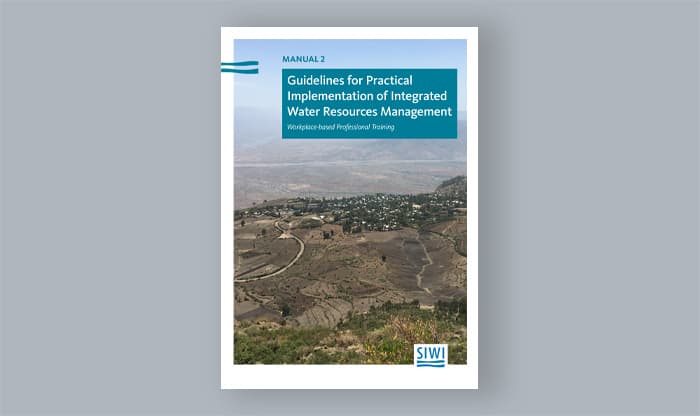
IWRM Manual 2 seeks to equip target water practitioners with knowledge and skills required to plan and implement IWRM interventions at basin levels. The manual provides basic information on what needs to be done in order to accelerate implementation of IWRM. These guidelines are not exhaustive but meant to stimulate discussion and learning around implementing [ ]
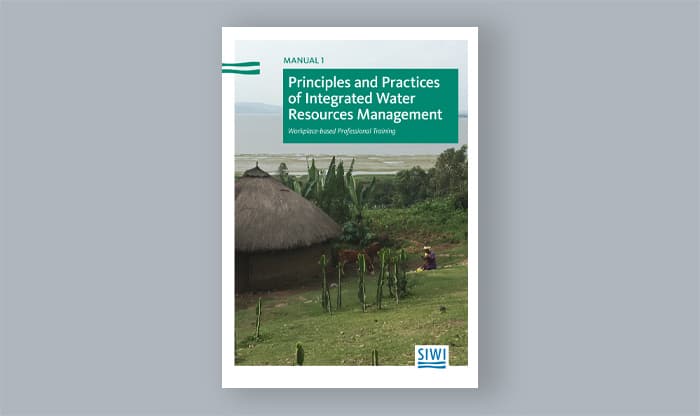
The main objective of this first training manual is to introduce stakeholders to the basic concept, principles and practice of integrated water resources management (IWRM). The learning outcome being to help these stakeholders develop a working understanding of IWRM which can translate into accelerated implementation and improved water resources management in the Rift Valley Lakes [ ]
Nov 16, 2020
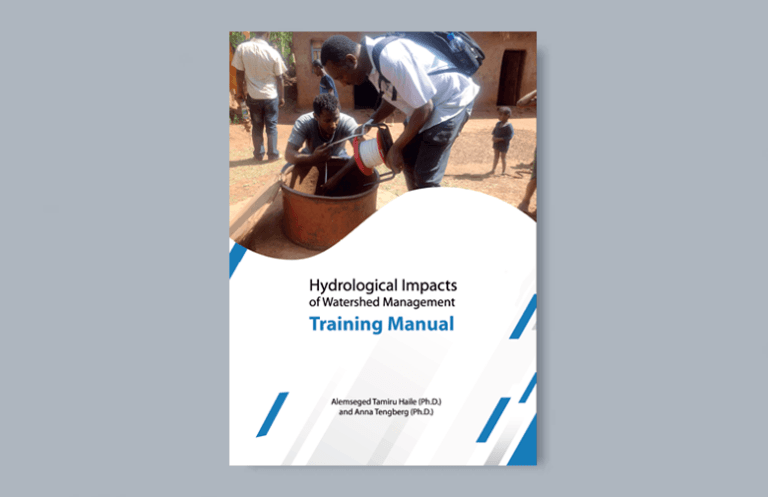
The purpose of this IWRM training programme is to introduce target participants (stakeholders, government officials, basin office staff, and any other interested water practitioner) to the history, concept, principles and practice of Integrated Water Resource Management (IWRM). The aim of this training programme is to help water practitioners develop a solid understanding of IWRM as [ ]
Guidance, methods and frameworks.Nov 1, 2020
Reports and papers.Oct 20, 2020
In disease outbreaks such as COVID-19, the situation is alarming for women and girls in fragile and conflict-affected states experiencing water scarcity. This paper highlights the gendered consequences of disease outbreaks in such states globally and explores how armed non-state actors are responding to COVID-19 in the Middle East and North Africa (MENA) region.
Reports and papers.Oct 5, 2020
Policy publications.Oct 1, 2020
Agroforestry can improve local water cycles and increase farms’ control over and access to freshwater. Trees are crucial components in local, as well as global water cycles. By incorporating trees in agricultural land, it is possible to improve food production systems and meet water needs without adversely affecting neighbouring or downstream water users. This brief focuses on the role [ ]
Policy publications.Sep 3, 2020
Page 20 of 20
Receive SIWI’s latest news, events, reports and jobs directly in your inbox.
You can unsubscribe at any time.
Read more about our newsletter