Stay informed
SIWI newsletter
Receive SIWI’s latest news, events, reports and jobs directly in your inbox.
You can unsubscribe at any time.

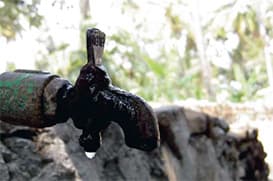
With growing water scarcity in an increasing number of countries, there is a significantly greater risk of corruption in the water licensing process. Water resource licensing and other allocation mechanisms are important because they underpin who gets access to water and provide a means to manage water fairly, efficiently and sustainably.
This report explores the nature of the risk using a 2007 field study of Chile and Kazakhstan as case studies for risk mitigation.
This study was supported by the Water Integrity Network (WIN) , the Swedish Water House (SWH) and the UNDP Water Governance Facility at SIWI (WGF).
Preventive actions to reduce the risk of corruption in water licensing particularly relate to:
The challenge in better governance of water resources clearly transcends the water sector. But judging by these two cases it requires a detailed look at the issue of water licensing to improve equitable and sustainable resource management.
Cite as: <p>How to Cite: Warner, J., Butterworth, J., Wegerich, K., Mora Vallejo, A., Martinez, G., & Gouet, C. and Visscher, J.T. 2009. Corruption Risks in Water Licensing with Case Studies from Chile and Kazakhstan. Swedish Water House Report 27. SIWI, 2009.</p>

Reports and papers·Nov 10, 2025
Resource·Nov 1, 2024

Reports and papers·Jun 19, 2024

Policy publications·Jun 14, 2024