Stay informed
SIWI newsletter
Receive SIWI’s latest news, events, reports and jobs directly in your inbox.
You can unsubscribe at any time.

El Salvador is the only Central American country with a trend very close to a situation of water stress. Due to social and economic development, water demand is steadily increasing, resulting in significant pressure on the water resource.
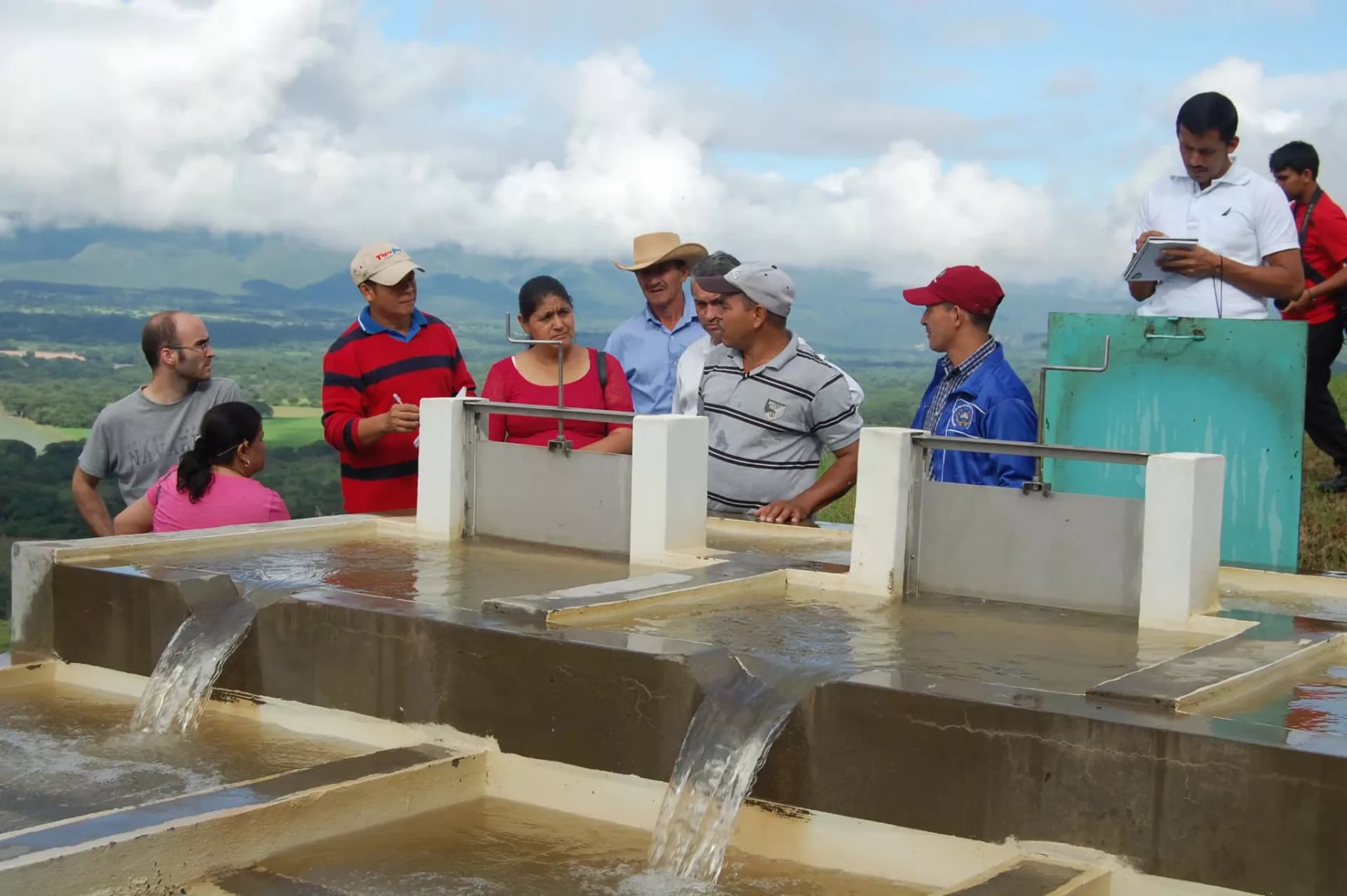
The people living in the Torola River Basin region of El Salvador are facing many problems related to water; lack of or very limited access, poor water quality which causes health problems, an unsustainable management of the resource which threatens its viability in the future and a low social participation in the decision making.
During the first phase, GoAL WaSH played a key role in establishing the multi-sectoral Water Cabinet to coordinate water reform. This comprised the heads of the 13 public institutions with power over water, and included representation from the Inter-institutional Technical Commission (the technical level of the same entities).
Project staff also facilitated a coordination process among governmental and civil society organizations to formulate a joint strategy for public awareness and mobilization around sustainable water management. This resulted in the release of several electronic publications and bulletins for both the public and water sector organizations, which outlined the challenges and opportunities of sector reform and its potential contribution to development. GoAL WaSH supported and promoted spaces for civil society actors to analyse, discuss, and contribute ideas around the theme of water, forming a multi-stakeholder water forum for the purpose.
The consultations led to the development of a roadmap with seven work agendas: inter-institutional coordination, water policies, water regulation and legislation, water sector planning, water investment programme, citizen awareness, and water financing. The roadmap provided an instrument for integrated sector planning and provided a clearer vision of the challenges facing state entities in the development of the water resources sector in the medium term. Implementation of the roadmap was accompanied by drafts for a new water and sanitation policy, integrated water resource management policy, national water management strategy, and a water law.
Despite these efforts, the process of water sector reform became highly politicized and was used as a matter of dispute among different political parties and sectors. This resulted in the presentation of three different water bills to Parliament. As a result, the reform was never agreed, and El Salvador still lacks a renewed water policy framework.
Given this situation, GoAL WaSH adopted a sub-national focus in its second phase. In the Torola river basin, the project was able to establish mechanisms for improved transparency, accountability, and efficiency in water management at the local level.
The project team developed a social audit manual to increase good governance, citizen participation, transparency, and accountability in water management at the local level. The manual helps communities to exert control over their water institutions and supports integrated water resources management by promoting coordination among actors at different levels. It also presents advice on social audit and participation mechanisms for citizen committees involved in water management at the local level. The manual was developed in consultation with relevant authorities and three municipality associations, representing 19 of the 27 municipalities in the Torola river basin. It was launched in January 2016.
GoAL WaSH also established a transparency committee in one of the municipalities. Comprising mayors and officers from health, education, and environmental services, the committee strengthens transparency and accountability in planning, designing, and implementing water management policies at a micro-regional level.
The project gave priority to capacity development and engagement of local actors through dialogue and participation. Awareness-raising among the citizens about the importance of the initiative resulted in greater involvement and commitment at the local level. As a result, the economic contribution from the municipalities to improve water conditions in the area surpassed the support given by the project, approximately tripling the original investment.