Stay informed
SIWI newsletter
Receive SIWI’s latest news, events, reports and jobs directly in your inbox.
You can unsubscribe at any time.

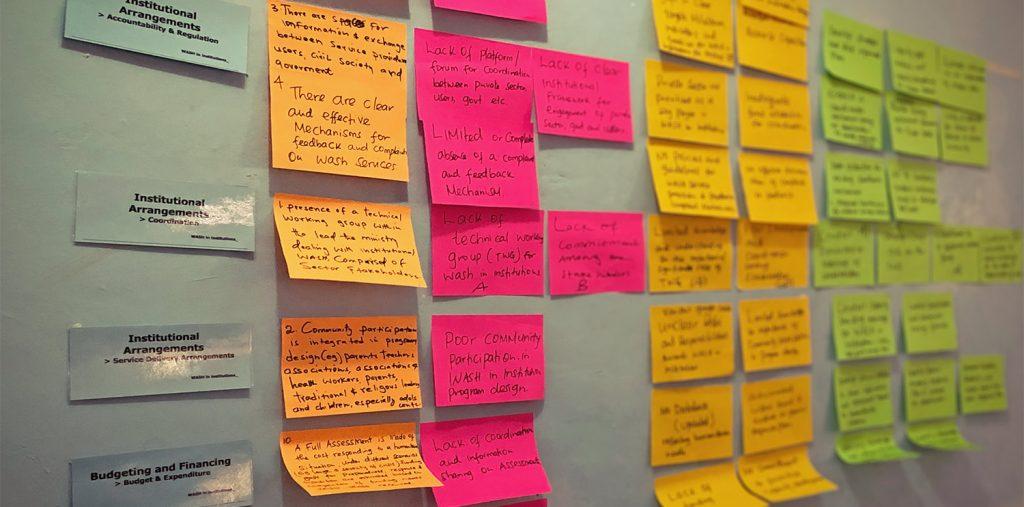
The goals of this project are to document, analyse and disseminate experiences, insights and lessons learnt from 11 water supply and sanitation governance programmes to:
Water governance is the set of social relations or system that determines who gets what water/services, when and how. ‘Good governance’ in the water supply and sanitation sectors is thus crucial for improving access to water and sanitation services.
Yet, water and sanitation development often focus heavily on infrastructure investments, overlooking the importance of also investing in the capacities and institutions at national, regional and local level responsible for delivery, governance and maintenance of the services. As a result, infrastructure solutions are underutilized, poorly managed and unsustainable. Water and sanitation services also often fail to reach poor and marginalized groups hence democratization of the governance processes through increased participation, transparency and accountability is key.
To avoid this, capacities about how to integrate strategies to strengthen governance in infrastructure investments need to be developed and applied. Unfortunately many organizations and institutions lack the mechanisms and incentives to foster internal continuous learning that would enable them to take advantage of the knowledge and lessons learnt that exist among their own staff – much less, are able to share that knowledge to the benefit of other actors.