Stay informed
SIWI newsletter
Receive SIWI’s latest news, events, reports and jobs directly in your inbox.
You can unsubscribe at any time.

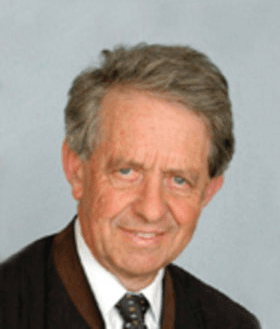
Peter-Wildererr-SWP-2003
In the long term, Professor Wilderer believes water management can only be successful if the interrelationships between environmental factors, ecological and microbiological systems and human activities are understood in detail. Based on this and a repeatedly shown ability to define scientific problems across disciplinary borders, Professor Wilderer has developed and demonstrated a profoundly holistic vision of sustainable and integrated water and wastewater management.
Peter A. Wilderer is a Professor at the Technical University of Munich and serves also as Director of the Institute of Advanced Studies on Sustainability (IoS). Educated as a civil engineer, Professor Wilderer realised already in the early 1970s the need to understand various ways humans affect the water cycle. By bringing scientists of different disciplines together to solve problems, and by communicating with the public, industry, business and public institutions, he has demonstrated that decision making might be based on sound science and appropriate technology and result in sustainable water management.
His initiation of the international programme ”Safe Blue Danube” on water-related risk management is one such example. The aim is to develop appropriate measures to detect, avoid and counteract disastrous events concerning flooding and accidental pollution in the Danube river, its tributaries and delta in the Black Sea.
The hallmarks of Professor Wilderer’s research are a rare combination of detailed technology development and a deep concern for the environment and human quality of life. His contributions to basic discoveries now applied in modern biofilm reactors enable treatment facilities world-wide to clean waste-water from homes, business and industries, and return it safely every day for reuse in the water cycle.
He was one of the first researchers, however, to question the sustainability of transferring Western sanitary concepts, with their traditional emphasis on centralised, large-scale solutions used in big cities, to the rest of the world. He thus recognised and promoted early the importance of decentralised, cost-effective small-scale wastewater treatment and reuse of water, important since 95 per cent of the urban population growth by 2025 will be in rapidly growing cities in developing countries.
Creative construction and curiosity are the essential building blocks for any path in life. “Even if you do not have the technical equipment or an expensive analysis kit, it is all in your mind,” he says. ”The Internet offers wonderful possibilities to learn and to know, but it is the individual’s creativity and ability to find adapted solutions which is the key.”
Such creativity, he concludes, already exists in, for example, developing countries and will help them in their search for solutions to their specific water problems.